Hydrogel films appear in biosensors - fluorescence-based sensors where film thickness control matters, and aptamer-based DNA hydrogel sensors where thickness is used for target-protein detection. Hydrogels hold a high concentration of water but also particles and gel formations that scatter light, so optimizing spot size is important; MProbe 20 is a good match. During process development the films can be very non-uniform, and MProbe measures thickness distribution quickly to help optimization. The FFT-based analysis reduces the need for calibration and suits inline production, with continuous 24/7 monitoring over TCP or analog output.
MProbe 20 Vis usually provides the optimal range; for thicker films, MProbe 20 VisHR is used instead.
Production and inline use
MProbe can measure hydrogel thickness distribution quickly during process optimization. FFT-based analysis reduces the need for calibration and is well suited for inline production measurements. Continuous 24/7 monitoring can output data over TCP or in analog form for PLC integration.
Basic specification
| Recommended system | MProbe 20 Vis / VisHR |
| Wavelength range | 400–1000 nm (Vis); 700–1100 nm (VisHR) |
| Wavelength resolution | < 1 nm (Vis); < 0.3 nm (VisHR) |
| Precision | < 0.01 nm or 0.01% |
| Accuracy | < 1 nm or 0.2% |
| Measurement time | < 1 ms (Vis); < 100 ms (VisHR), typical and sample dependent |
| Spot size | 200 or 400 µm, depending on probe |
| Imaging | Integrated 2 MP camera to display the measurement area |
| Automation | Custom holders and automation available |
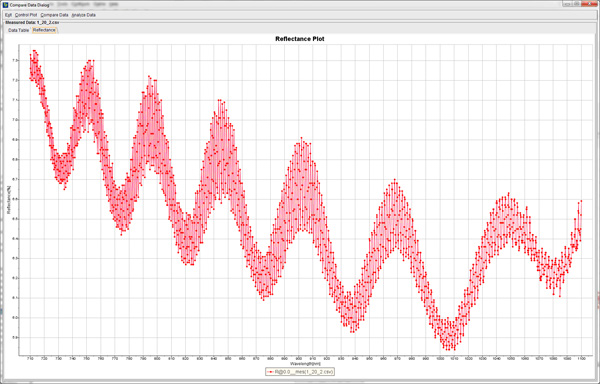
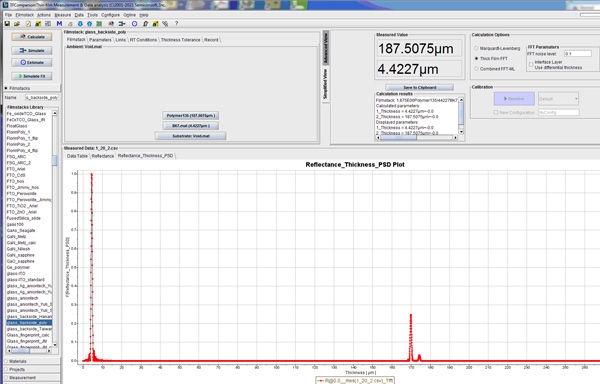
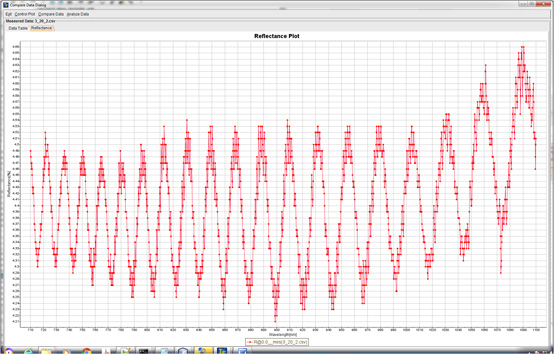
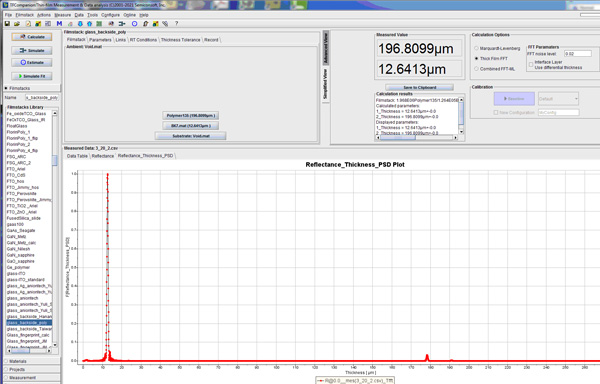
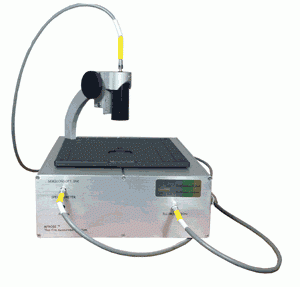
Measured with: MProbe 20 Vis / VisHR (MProbe 20).