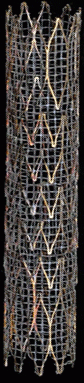
Drug-eluting stents (DES) pair a metallic stent with a polymer coating and an antiproliferative drug released over time; too thick and the coating can delaminate, too thin and there's inadequate protection and drug-release time. Other stents - for clot extraction or blood-flow restriction - are covered or encapsulated with polyurethane, PTFE or similar films stretched under pressure. In both cases, coating thickness and uniformity are critical quality-control tasks.
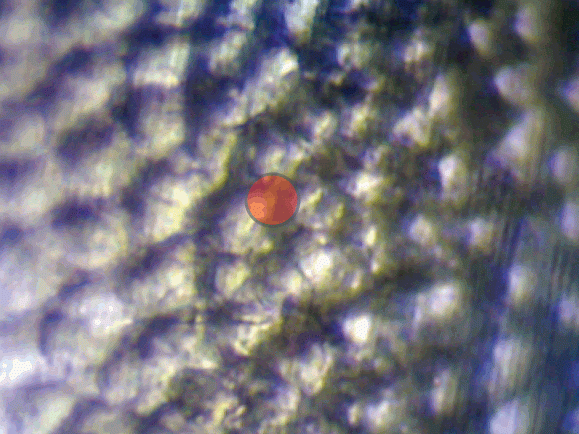
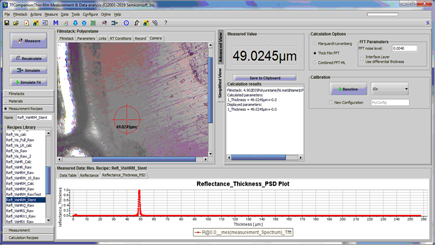
A small spot is essential: typically ~10 µm for coatings on stent struts and 20–40 µm for encapsulation polymer. The camera image and reticle make it easy to navigate to the exact location and display results on the image; the 700–1100 nm range suits these measurements best.
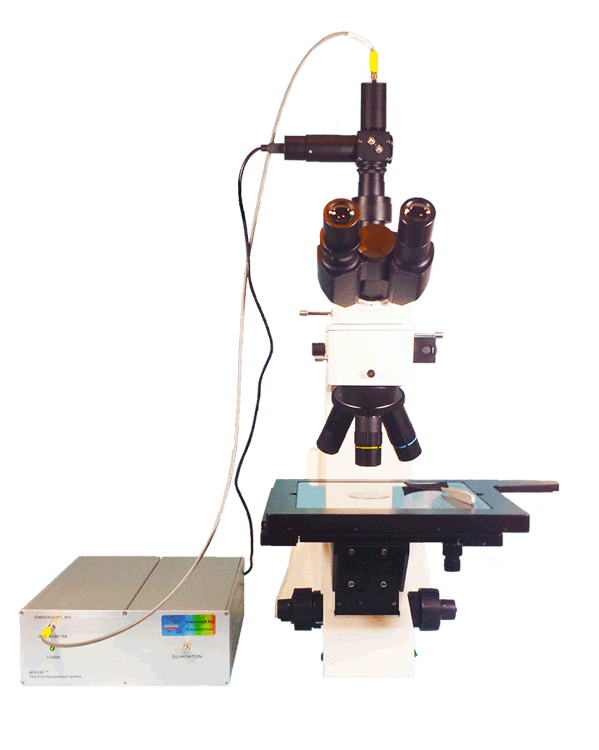
Why use MProbe VisHR MSP?
- Small-spot measurement can be adjusted for stent struts or encapsulation polymer, typically ~10 µm for struts and 20–40 µm for polymer films.
- Up to four objectives can be used, with calibrations stored for different configurations.
- The live camera image and reticle make it easy to navigate to the desired measurement site.
- Results can be displayed directly on the sample image.
- The 700–1100 nm wavelength range is well suited for these measurements.
Basic specification
| Recommended system | MProbe VisHR-MSP |
| Wavelength range | 700–1100 nm |
| Wavelength resolution | < 0.3 nm |
| Precision | < 0.01 nm or 0.01% |
| Accuracy | < 1 nm or 0.2% |
| Measurement time | < 100 ms typical, depending on sample reflectivity |
| Spot size | 2–200 µm, depending on objective |
| Imaging | Integrated 2 MP camera to display the measurement area |
| Automation | Custom holders and automation available |
Measured with: MProbe VisHR-MSP (MProbe 40).